Proteomics & Metabolomics

Uncover molecular insights with advanced mass spectrometry

Home Proteomics & Metabolomics
01

Consultation & Design

Define project goals and experimental design

02

Sample Preparation

Extraction, digestion, derivatization

03

LC-MS/MS Analysis

High-resolution mass spectrometry & data processing
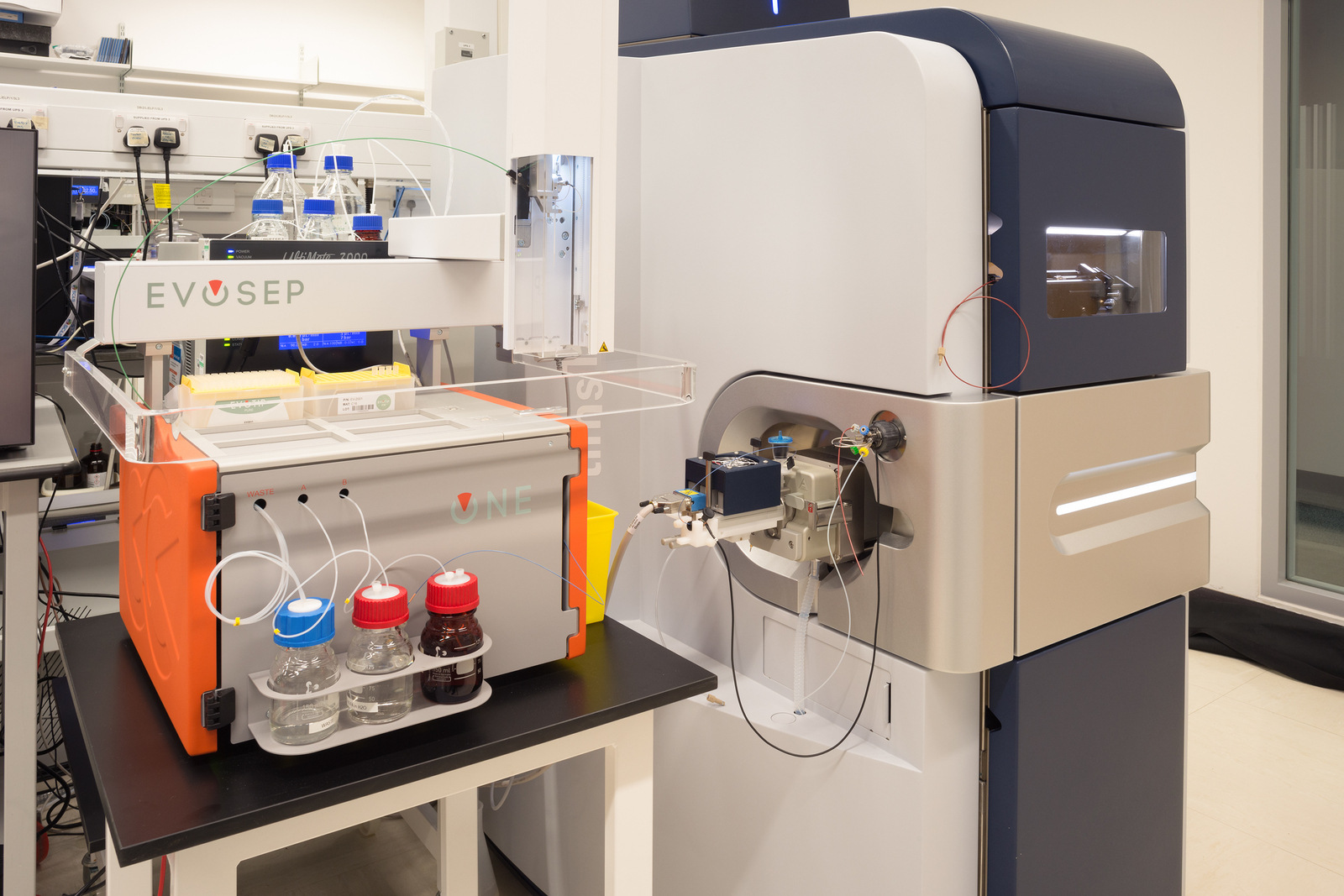
Mass Spectrometry Lab

High-Resolution Proteomics & Metabolomics

Complete Bio Solutions Inc offers state-of-the-art proteomics and metabolomics services powered by Thermo Fisher Orbitrap Fusion Lumos, Q-Exactive HF-X, and Sciex TripleTOF systems. Our workflows include protein identification, quantification (TMT, label-free), post-translational modification analysis, and untargeted/targeted metabolomics. We support biomarker discovery, mechanistic studies, and clinical research with full statistical and pathway analysis.

Our Integrated Workflow

From sample preparation to biological interpretation, we follow optimized protocols including protein extraction, tryptic digestion (for proteomics), metabolite extraction (for metabolomics), LC-MS/MS acquisition, and database searching (Mascot, MaxQuant, Compound Discoverer). Stringent quality controls ensure reproducibility and accuracy.

  • High-resolution MS: up to 240,000 resolution, ppm mass accuracy
  • Deep proteome coverage: >6,000 proteins per sample (mammalian cells/tissue)
  • Metabolite annotation: HMDB, METLIN, KEGG databases & in-house libraries

Frequently Asked Questions about Proteomics & Metabolomics

For proteomics: 20-100 µg protein lysate, 1e6 cells, 10-50 mg tissue, or 100-500 µl biofluid. For metabolomics: 50-100 µl plasma/serum, 1e6 cells, or 10-50 mg tissue. Detailed protocols for collection and storage are provided.
Standard turnaround: 3-4 weeks for discovery proteomics, 2-3 weeks for targeted assays, and 2-4 weeks for metabolomics. Rush services are available for an additional fee.
We deliver raw MS files, processed protein/peptide lists, label-free or TMT quantification, statistical analysis (t-test, ANOVA, PCA, heatmaps), and pathway enrichment (GO, KEGG). For metabolomics, we provide metabolite identification and relative quantitation.